
Deep Dive into Online Chlorine Monitoring
Accurate chlorine monitoring is essential for regulatory compliance and process control in municipal and industrial applications. Choosing the right analyzer can help reduce chemical costs, minimize downtime, and ensure consistent water quality.
Join Disinfection experts Vadim Malkov and Terry Smith for a detailed, interactive webinar covering:
- Technology comparison for chlorine monitoring – pros, cons, and selection criteria for different monitoring technologies (colorimetric vs amperometric).
- Deep dive on the CL17sc process chlorine colorimetric analyzer: Features, benefits, and real-world application guidance, best practices for installation, and ongoing maintenance. Troubleshooting strategies – solve issues quickly and keep your process running smoothly.
Walk away with actionable insights that can help you improve reliability, optimize your process, and deliver safe, high-quality water to your customers.
Dive In
Agenda
- Introduction
- Water Disinfection Methods
- Chlorine Chemistries
- Online Instrument Selection Guide
- Chlorine Monitoring/Analyzers
- Routine Maintenance
- Troubleshooting Guide
- Q&A
Event Q&A
| Question | Response |
|---|---|
| That is not an option for as us as we run a small system, we make water for one day and then off for up to 10 days. | In your situation a CL17sc with flowmeter should work. It’ll determine when flow is off and go into Standby mode. Once the flow is back, the analyzer will restore normal operation. It will be highly advisable to change the reagents monthly anyway. |
| What is going to be better equipment for applications where monitoring equipment is only in use for 24-36hrs and then off with no flow for 5-10 days? | Typically, we recommend continuous flow for either of these products not flow that is that intermittent. |
| How well does the amperometric unit work on chlorinated well water (that has not gone through a normal potable water filtration plant) with variable well water composition (as wells cycle on and off). | An amperometric system may work in your situation, as long as there is consistent water flow through the cell. Accuracy may vary with chlorine concentration (if it fluctuates more then 20%) and pH, while the latter should be stable for ground water. |
| Elaborate on the chloramines organics? How do you measure them? | There is no good method to measure organochloramines directly, only by the difference in total chlorine, monochloramine, and free chlorine readings. At the same time, pH and free ammonia should be measured to understand if there is dichloramine in the water as well. If you have no free ammonia, some free chlorine, pH > 8, then the difference between total chlorine and monochloramine will be likely due to dichloramine + organochloramines. If there is free ammonia, then this difference will be likely due to organochloramines. |
| What percentage of accuracy between Cl17 and the SL1000? | Rule of thumb for the expected deviation between readings is 10% or 0.08 ppm, whichever is greater. The latter value is a sum of accuracies (largely LOD) for the two instruments/methods for free and total chlorine. |
| What is the pH range for Mono, Di and Trichloramines? | Practical preferred range for stable formation of monochloramine is >8.3. Dichloramine will prevail at the <7 and trichloride (trichloramine) will be prevalent in 4-6 pH range. |
| What is the life span of Sc controller and at what ambient temperature? | The controller can last for years with no problem. Typically 0-45 degrees C is a good ambient range. |
| What is the “sleeping effect” related to amperometry? | The probe is not functioning and reading and needs to be re-conditioned. Thank you for your question. After the presentation, you will receive a survey with the chance for your Hach Representative to contact you if you have any further questions. VM: in absence of chlorine or at its very low concetrations (approx <30 ppb), amperometric chlorine probes may lose their sensitivity due to multiple reasons, especially membrane-covered probes. After chlorine reappearance it may take up to several hours for the "sleeping" probe to regain sensitivity and it will have to be recalibrated to perform accurately. |
| Is it smarter to always use the Hach filter and disc filter where raw/dirty water is concerned to prevent biofouling? Is it OK to not include them in these applications? | You can use any filter fits your application and maintenance schedule, it does not have to be Hach-provided solution, just make sure there is an additional filter if you want to minimize frequency of cleaning. |
| can you explain little more on how to calculate organic chloramine based on free, total and mono chloramine? Thanks | There is no good method to measure organochloramines directly, only by the difference in total chlorine, monochloramine, and free chlorine readings. At the same time, pH and free ammonia should be measured to understand if there is dichloramine in the water as well. If you have no free ammonia, some free chlorine, pH > 8, then the difference between total chlorine and monochloramine will be likely due to dichloramine + organochloramines. If there is free ammonia, then this difference will be likely due to organochloramines. |
| What level of turbidity would interfere with the ultra low range. at what point would you need the pre-filter? | Turbidity above 30 NTU may interfere with CL17sc or the ULR version of this analyzer. |
| Why did Hach stop making the more affordable SC200? | The sc200 was aging for the electronics. The SC4500 has better and more features than the SC200. The SC4500 is the direct replacement for the SC200. |
| Does Hach provide the standpipe assembly? | You can purchase with the assembly. |
| Is the pressure regulator required with a standpipe installation? | The pressure regulator is required only if it exceeds 10 psi of pressure with standpipe. |
| With a installation using a pump, what kind of pump does hach recommend? | Contact us for recommendations on pump specifications, but not a certain brand for your particular situation. |
| Is it true that you cannot do the colorimetric method for total residual chlorine if manganese and iron are present? i was told they interfere with the results and amperometric analysis is required for. | I would not say it is an absolute as it depends on the concentration of the Mn or Fe present, but at high enough concentrations, they could interfere. |
| If the sample contains Nitrite, would that interfere with this analyzer? | It should not be a problem with either colorimetric or amperometric. |
| Chlorinated tap water works well to clean the flow meter in wastewater applications. | Yes, this is correct and we do recommend switching the sample to tap water on a regular basis to clean out the analyzer that measures dechlorinated water. |
| For very low chorine concentrations (0.05 ppm) which technique is recommended? Our application is to protect RO membranes downstream. | ULR CL17sc – Learn more about maintaining RO membranes |
| Does the CL17sc measure Total Chlorine only? Is there option of measuring Free Chlorine with CL17sc? We use free chlorine instrument feedback for dechlorination pre-reverse osmosis. | Depending on the reagents, the CL17sc will read either Total or Free Chlorine. It will not read both at the same time. To get both readings, you need two analyzers, one for total and one for free. |
| if there is air in the header pipe, does long standpipe adequate for accurate chlorine reading with CL17sc? | As long as there is enough sample coming to the analyzer, it is all good. |
| Do you recommend CL17sc instrument for dechlorination? Thanks. | I have seen it used for dechlorination in many applications, yes! |
| Do I need to be on site to read cl values or can I see what’s happening online through a screen in the lab? | You can connect the SC4500 to your PLC or SCADA system to see the readings on a different screen. |
| How often does it run a test? | The CL17sc runs a test every two and a half minutes. The CL10sc is a continual read. The results can be logged on the SC4500 in different intervals. |
| How do you program the device to run a test? | The analyzer is connected to the SC4500 controller and is preprogramed to run the tests. You are not able to “trigger” the analyzer to do a test. |
| What do you do with the waste? | The waste off of the CL17sc will need to be handled by your local regulations. Some plants can discharge to a sanitary system, others may need to dispose of the reacted samples in other ways. |
| If monochloramine was generated outside the system at a high pH (~10) then injected into a lower pH water (~7) would it be expected to degrade to di or tri chloramine? | It may degrade if the resulting pH is <8. It will depend on your water alkalinity, and other factors, so you better off bringing the pH up to maintain stable monochloramine concentration and reduce corrosivity of the water. |
| Are there any plans on developing a version of the Cl17 to directly measure monochloramine vs total chlorine? | 5500sc Ammonia Monochloramine Analyzer, 2 Channel with External Filter |
| On a CL10 probe, if we verify calibration weekly, is that acceptable? and calibrate if it goes 10% out of range? | It is always a call on your end how far you want it to drift, but it does seem a reasonable practice. |
| Can this instrument support a generation system that cycles on and off? | From the SC4500 controller, you can take the 4-20mA signals out to a pump to turn on and off. This can be referenced in the manual for the SC4500 and connecting the 4-20mA outputs. |
| Can the range be changed to keep unit from going into error or recommending calibration for the SC4500 with CLF10? | This could be a setting for the 4-20mA outputs. Please contact Tech Support to see if there is a setting that can be changed. |
| I have issues with my results going from .3 to 1.0 and it always asks for calibration. Is there a way to change the range? | I’m not sure what instrument you are using. If you are using the CL17sc then you can change the Signal Average to three or five. The analyzer will then average the last three or five readings to give you a more stable reading. Additionally, there are two functions of CL17sc that are not ON by default and often overlooked to be activated: Bubble Rejection and Irregular Value – recommend to activate. |
| Have you seen an application where both colorimetric and amperometric inline monitors? How was this done and were there any benefits? | There are chlorine sensors that can be inserted in a pipe, while colorimetric analyzers are using bypass, because it is a batch analysis. |
| High TDS effect on measuring | Very much a relative question on what is “high” TDS, but it certainly can impact results. |
| Is the flow meter cleaned mounted or unmounted? Is one method preferred? | The flowmeter can be easily cleaned on the instrument (mounted as is), no need to take it off. There is an instructional video (and more!) available on the CL17sc Resource Center. |
| What is the detection limit of the ultra low concentration CL17? | The range for the ULR CL17sc ios 0.008-5.0mg/L Cl2. Limit of detection is 0.008 mg/L at 25 C. Additional details are available on the CL17 Resource Center |
Additional Resources
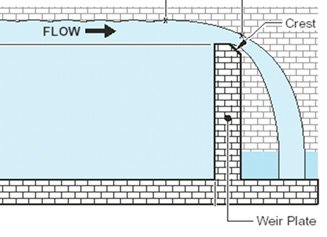
Pairing Digital Flow Sensors with the Hach AS950 Automatic Sampler
go to HACH.COMIntroduction When the Hach® AS950 Automatic Sampler launched in 2015, we were excited to offer the option to connect digital flow sensors to the controller. Digital flow sensors can be used for collecting flow proportional samples, as well as triggering...

Maximizing Phosphorus Removal
go to HACH.COMPhosphorus removal plays a critical role in protecting waterways, meeting permit requirements, and managing treatment costs. But optimizing phosphorus treatment isn’t always straightforward, especially when processes, influent conditions, and system...

Optimize Total Suspended Solids (TSS) & Turbidity Measurement
go to HACH.COMAccurate measurement of Total Suspended Solids (TSS) and turbidity is vital for effective water quality management across municipal, industrial, and wastewater environments. Real-time insights into solids concentrations empower operators to improve...


Privacy Policy | Cookie Policy | Cookie Settings | Do Not Sell or Share My Data
©Hach All rights reserved.